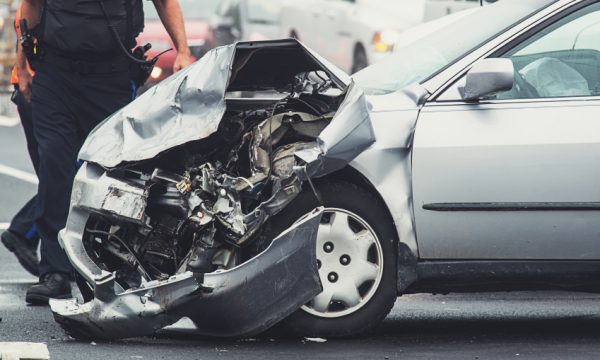
You'll probably want your insurance company involved if you crash into somebody's car, even if the damage is minor.
Updated Jan 26, 2024 · 3 min read Written by NerdWalletNerdWallet writers and editors are experts in their field and come from a range of backgrounds in journalism and finance. We adhere to the highest editorial standards to ensure our readers have the information necessary to make financial decisions with confidence.
Many, or all, of the products featured on this page are from our advertising partners who compensate us when you take certain actions on our website or click to take an action on their website. However, this does not influence our evaluations. Our opinions are our own. Here is a list of our partners and here's how we make money.
After the embarrassment of causing a minor accident comes the dread of a possible car insurance rate hike. Even if you have plenty of car insurance coverage, you might be tempted to keep the mishap a secret from your insurance company and pay for the car repairs out of your own pocket.
That might make sense if your car was the only one involved — you backed into a pole, for instance. But causing car damage or injuries to others means you could be on the hook for thousands of dollars. Here’s how to judge when to tell your insurer about an accident.
Tell your car insurance company?
You put a dent in someone's car and they suggest settling it privately with cash
Yes. Don't make a private deal, in case they demand more money later. Suggest the person make a claim and tell your insurer about the accident.
You cause serious car damage to someone else
Yes, tell your insurer about the accident. There might be more costly damage than you realize.
You cause a car accident with injuries
Yes, tell your insurer. Injuries can easily lead to big medical bills.
You accidentally cause small damage to your own car, like backing into a pole
Don't bother contacting your insurer if you have no collision coverage, or if the damage is less than your collision deductible. There would be no claim payment in that case.
You accidentally cause a lot of damage to your own car
Contact your insurer if you want to make a claim on collision coverage. Weigh the possibility that your rates could go up at renewal time because of the claim. If you don't have collision coverage, there's no reason to contact your insurer.
Let’s say you make a dumb driving move and put a dent in somebody else’s car. Settling the accident with the other driver, without the help of your insurer, is risky. After all, you don’t really know whom you’re dealing with. What if you pay for repairs, and months later he comes back demanding more?
Your liability insurance is there to protect you from lawsuits, and your insurance company is experienced with handling parties involved in an accident, no matter how angry they are. Liability coverage pays for the damage and injuries you cause others, and it pays your legal defense costs if you’re sued as a result of an accident.
To prepare for a possible claim against you, provide the other driver with your insurance information, call the police, and report the incident to your insurance company. It’s also a good idea to take photos of the damage to both cars before you part ways with the other driver. Depending on the jurisdiction, the police may not come to the scene of the accident if no one is injured and the damage is minor. In that case, file a report at the police station. A police report provides important documentation, and the insurance company will ask for a copy if you file a car insurance claim.
Others’ damage: Even if the other driver is honest and the accident was only a fender bender, the damage might be more serious than it first appears. In 2021 the average property-damage liability claim was $5,314, according to ISO, a data analytics provider.
Others’ injuries: Likewise, it can be hard to tell whether injuries are involved at the scene of an accident. Some injuries, such as whiplash, have delayed symptoms that might not show up right away. You definitely don’t want to be held responsible for paying someone else’s medical bills. Let your insurer handle it. The average bodily injury liability claim was $24,211 in 2022, according to the Insurance Information Institute.
Your own car damage: Your car might have hidden damage. Your collision insurance will pay for repairs, minus your deductible. The Insurance Information Institute reports that the average collision claim was $5,992 in 2022. Your policy likely requires you to notify the insurance company within a reasonable amount of time after the accident. Waiting too long could jeopardize a claim payment.
If you purchased only liability insurance and didn’t buy collision coverage, then your policy doesn’t cover damage to your car anyway.
If you have collision coverage, it will pay for damage to your car. But say you backed into a concrete post, denting the bumper — you might consider paying for the repairs yourself or just leaving the dent rather than filing a claim on your collision insurance. Get a quick repair estimate. If the repair costs less than your deductible, then there’s no point in filing a claim. The deductible is the amount you pay out of pocket toward a repair.
If the repair costs for your car are more than your collision deductible, you’ll have to weigh whether the insurance payout is worth the risk of a rate increase later. Whether your insurance rates will go up after a claim depends on your previous claims history, your insurance company rules and even your state, which may regulate the circumstances under which insurers can add a surcharge to your rate. Surcharges — industry lingo for premium hikes — typically last three to five years, and may gradually decrease over that period.
Whether or not your rates go up after filing a car insurance claim, it’s always a good idea to compare car insurance quotes at policy renewal time to make sure you’re getting the best price. NerdWallet’s car insurance comparison tool can help.
About the authorYou’re following NerdWallet
Visit your My NerdWallet Settings page to see all the writers you're following.
On a similar note.
Instantly compare top auto insurance companies.
Get started
Switching your insurance could save you hundreds a year.
Link your auto or property policy to our new insurance assistant and we'll tell you if you could save money. It's just one more reason to join NerdWallet+ for $49/year.
LEARN MORE NerdWallet Home Page Finance Smarter Credit Cards Financial Planning Financial News Small BusinessDownload the app

Disclaimer: NerdWallet strives to keep its information accurate and up to date. This information may be different than what you see when you visit a financial institution, service provider or specific product’s site. All financial products, shopping products and services are presented without warranty. When evaluating offers, please review the financial institution’s Terms and Conditions. Pre-qualified offers are not binding. If you find discrepancies with your credit score or information from your credit report, please contact TransUnion® directly.
NerdUp by NerdWallet credit card: NerdWallet is not a bank. Bank services provided by Evolve Bank & Trust, member FDIC. The NerdUp by NerdWallet Credit Card is issued by Evolve Bank & Trust pursuant to a license from MasterCard International Inc.
Impact on your credit may vary, as credit scores are independently determined by credit bureaus based on a number of factors including the financial decisions you make with other financial services organizations.
NerdWallet Compare, Inc. NMLS ID# 1617539
California: California Finance Lender loans arranged pursuant to Department of Financial Protection and Innovation Finance Lenders License #60DBO-74812
Insurance Services offered through NerdWallet Insurance Services, Inc. (CA resident license no.OK92033) Insurance Licenses
NerdWallet™ | 55 Hawthorne St. - 10th Floor, San Francisco, CA 94105
